A jar of honey on a market stall is easy to trust. The beekeeper is standing right there, the tag is handwritten, and the wax on the lid still smells faintly of smoke. The same honey on a shop shelf, in a printed label with a paragraph of small type, is harder to read — even though it may come from the same hives. Labels are not written for shoppers. They are written to satisfy regulations, fit a printer's template and survive a van journey. Once you know where to look, most of them give up their story in under a minute.
Start With the Name and the Address
Before you read a single quality claim, find out who is responsible for the product. Every label must carry a name and an address, but the wording matters. "Produced by" tells you the food was made there. "Packed by" or "Packed for" tells you only that someone put it in a box — the milk or the fruit could have come from anywhere. On a mountain plateau, where small dairies and family apiaries do their own packing, this distinction usually separates a genuine farmhouse product from a repackaged one.
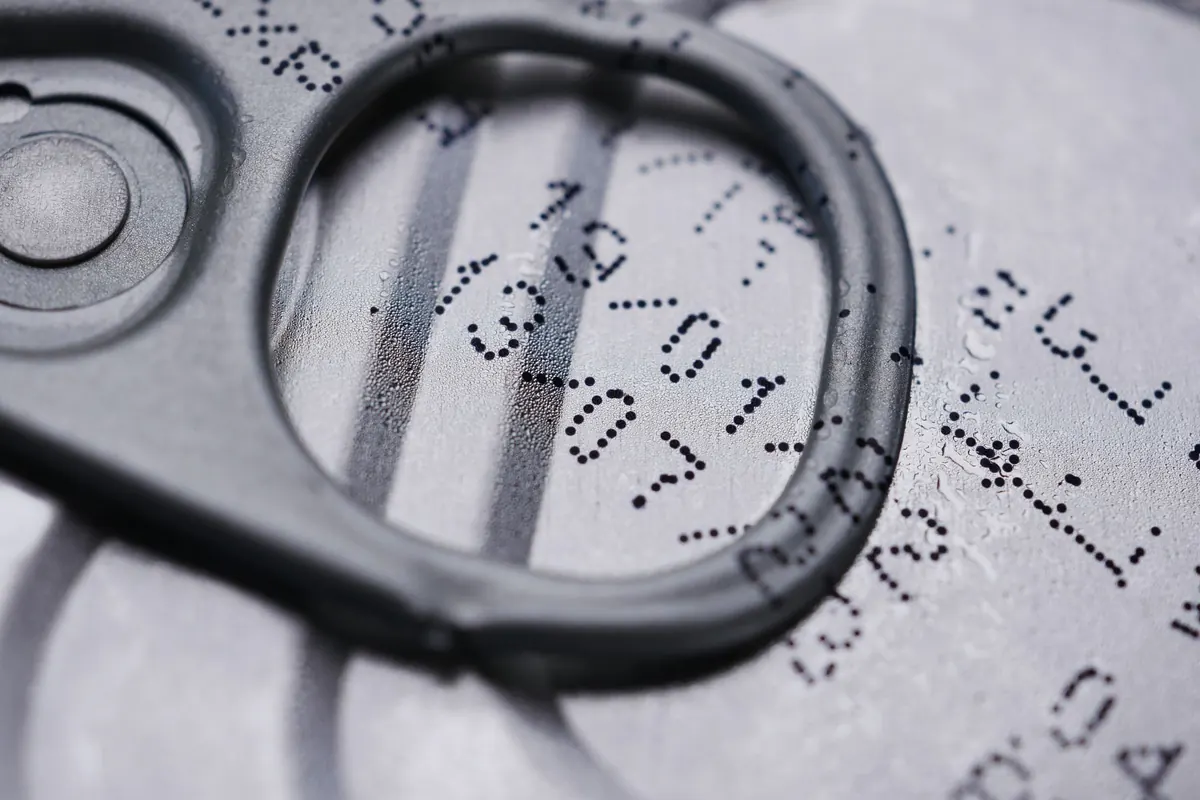
Then check two small things: the lot code and the date. A lot code (sometimes marked on the lid or the rind rather than the printed front) is what lets a producer trace the exact batch if something goes wrong — and it is a decent sign that the producer expects to be held to account. For preserved goods, look at the drained weight as well as the net weight. A 500-gram jar holding 280 grams of fruit and 220 grams of syrup is a different product from a jar of nearly all fruit.
The Marks Worth Knowing
Protected origin marks
The European system of protected names is the one most worth recognising. PDO (DOP on Italian labels) means the product is produced, processed and prepared inside a defined area — in practice, that the animals or crops come from there too. PGI (IGP) is slightly looser: at least one stage of production happens in the named area, and the place name is tied to the product's reputation. TSG (STG) describes a traditional method rather than a place. These marks are backed by a written specification and checked by an independent control body, so their presence means a claim has actually been verified. It does not mean you will love the product; it means the story on the front is not marketing invention.
Organic certification
Organic products carry a certification mark and, in Europe, a code identifying the control body — a two- or three-letter prefix followed by a number. If you care about organic farming, look for the code, not the word "natural", which is largely unregulated. On the plateau, organic certification is common among small cheese producers and rarer among beekeepers, whose work is hard to certify economically.
Mountain and consortium marks
"Mountain product" is a specific term with rules about where the animals are raised and where the food is made. Uses of it are worth taking seriously, but they still say nothing about quality — a mountain product can be made well or badly. Producer consortium marks, the circular stamps on the rind of many alpine cheeses, sit somewhere between the two: they are not the same as a protected designation, but they usually indicate that a group of makers has agreed on rules and that someone inspects them. Ask at the counter which mark is which; producers are generally pleased to explain.
A label is a set of claims. Whether it is worth trusting depends on who checked the claims — and whether anyone can lose something by lying.
Origin Claims, Decoded
"Made in Italy" describes where the last substantial transformation happened, not where the milk came from. A cheese can be made in Italy from milk from elsewhere. If the origin of the raw material matters to you, look for phrasing such as "milk from the plateau", "single-herd" or a named valley, and be aware that words like "local" and "artisan" have no agreed legal definition in most places. They may be perfectly honest — many are — but they are not verified in the way a control body verifies a protected name.
Single-ingredient products are the easiest to check. Honey, milk, chestnuts and herbs can only come from somewhere; a named village or valley on the front is a checkable claim, and a good producer will happily tell you which slopes the hives sat on. Watch the small word "with", too. "Honey with walnuts" should contain actual walnuts in meaningful quantity; "walnut flavour" means it does not.
Cheese, Honey and Preserves: Where to Look
Cheese
The important information is usually on the back label or a paper band. Look for the species and treatment of the milk — cow, sheep, goat, or a mix; raw or pasteurised — the type of rennet, and an ageing time. Ageing is given in months and is the single most useful number on a mountain cheese: a two-month toma and a fourteen-month one are different experiences, and the price difference usually reflects real time, real storage and real loss of moisture. If you eat vegetarian, or cook for someone who does, check the rennet: microbial rennet is often stated, animal rennet is sometimes implied by silence. For raw-milk cheeses, anyone in a vulnerable group — pregnant, very young, elderly or immunocompromised — should take advice from a health professional before deciding, as with any raw-milk product.
Honey
Three things tell you most of what you need. First, the floral source: single-flower honeys like acacia or chestnut should taste distinctly of that plant, while "millefiori" or wildflower is a blend by definition. Second, the origin line, which in Europe must state whether the honey comes from within the EU, outside it, or both — a jar marked simply "blend of EU and non-EU honeys" is legitimate, but it is not a plateau product. Third, the harvest year, if it is given. Honey is not a vintage product in the way wine is, but a recent date does suggest a producer who moves stock. Crystallisation is not a fault; it is what many unheated honeys do.
Preserved goods
For jams, sauces, pickles and preserves, the ingredient list is the real label. Ingredients are listed by weight, so whatever appears first dominates the jar. A jam whose first ingredient is sugar tells you something immediately; the fruit content, often printed near the product name, tells you the rest. Check for pectin and citric acid, which are ordinary and harmless, and for colourings or flavourings, which are less common in small-scale preserves and usually signal a shortcut. With savoury preserves, look at the oil: olive oil named by origin is a good sign, generic "vegetable oil" less so.
Five Things to Check Before You Buy
- Who is responsible. "Produced by" beats "packed for" every time.
- Which mark, if any. A protected origin mark, an organic code or a consortium stamp each verifies a different claim. Know which one you are looking at.
- The ingredient list order. The first two or three ingredients describe the product far more honestly than the front of the pack.
- Numbers with meaning. Ageing months, fruit percentage, drained weight, harvest year. Numbers are harder to dress up than adjectives.
- The batch code and date. Present, legible, and not buried under the fold of the label.
When the Label Leaves You Unsure
Some questions a label simply cannot answer — whether the animals grazed outside, whether the honey was heated, whether the recipe is any good. That is what the counter is for. Ask the person selling it, and listen for specifics: a producer will name the valley, the breed, the month of the last batch, the reason this year's honey is darker. Vagueness is not proof of anything, but specifics usually are. And if a shop cannot tell you who made the cheese in front of you, that is worth knowing too. The label is a starting point, not the last word — the best guide to an Altipiano product is still the person who made it, standing a metre away.
Photo: Towfiqu barbhuiya / Pexels